Single this and single that are concepts very much in vogue in the Scotch industry and now borrowed by any categories of spirits. The problem is that for cognac blending is not a bad word. It is about making perfume, formulas, secret formulas ... that can be replicated year after year. It is about making in essence the best 'vintage' every year. Therefore, away from the bigotry of vintage cognac. This does not mean that "estate" and/or "vintage" and/or "single" cognacs are not good but they belong to a different program than what cognac is really supposed to be.
- Blending is about Spicing up Life
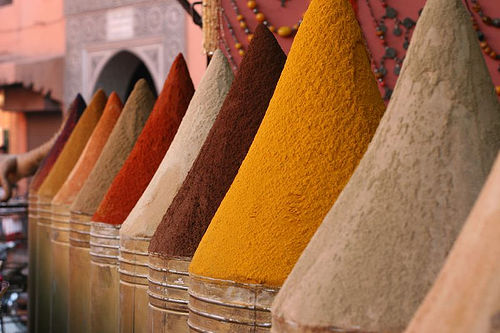
To better explain this I found this really article in the Washington Post published last April 2012 by Jason Wilson:
"I undertook an exercise similar to what a master blender would face on a daily basis. I’d been given bottles of five-year-old, 15-year-old and 30-year-old eaux de vie (what they call the spirit before it’s officially called cognac) and told to blend them into an XO (or “extra old”) cognac — one that would sell for $80 or more.
As I measured out various ratios of eaux de vie into beakers and flasks and started blending, I thought about how rarely this aspect of the spirits business is discussed. Sure, we hear a lot about raw ingredients, and distilling techniques and barrel aging, but when it comes to spirits, blending is an essential and often misunderstood aspect of production. Aged rums from the Caribbean, bourbons from Kentucky, and, of course, blended scotches like Johnny Walker, all rely on a blending to find the right recipe to bring about a consistent product.
Mostly, though, American drinkers don’t want to hear about blending. We love to talk about singular things: single-malts, single vineyards, single barrels, certain vintages singled out for their singularity. Blending? You may as well be speaking French. For instance, it’s a widely accepted fact within the wine industry that Americans prefer labels listing a single grape, rather than a blend from a geographic region.
Blending often removes an easy shortcut to connoisseurship: citing age. Is this a six-year-old? A 12-year-old? A 30-year-old? Drinkers just love to know the number. An age statement on the bottle becomes like a seal of approval to drop more cash. People will shell out more for a 25 year old whiskey than they will for a 12-year-old, even if the older one has simply turned to oak-flavored juice. If the label says the older spirit comes from a single cask, you can bet people will pay even more.
... A barrel is a living environment, sensitive to temperature and other elements, with different floors aging differently. Additionally, cognac comes from distilled wine, which has it own variations from year to year.
... Because I was creating an XO cognac, that meant the youngest brandies in the finished cognac must be aged at least six years. Most good XOs seek a “tasting age” of about 20 years.
Given that I was working with five-, 15-, and 30-year old eaux de vie, I assumed whatever I created would hypothetically be need to go into the barrel again for at least another year.
In my first attempt, I used 50 percent of the 15-year-old, which was the most concentrated and intense. Of the remaining half, I used two parts 30-year-old eau de vie to one part five-year-old. Because the alcohol level was at cask strength (around 100 proof), I added a tiny amount of distilled water to bring the mix down to 80 proof — which is what most cognac is bottled at. The result, in my humble opinion, was delicious.
Trichet (Cellar Master at Cognac Remy Martin) took a long time nosing. And then she smiled. “Mmmm,” she said. “That is a very expensive XO you have there.”
More expensive than Remy Martin’s XO? I asked, knowing that costs about $120.
“Oh yes, definitely. You have very expensive taste.”
On my second attempt, I used about 60 percent of the five-year-old, with its fresh apricot aromas and buttery mouthfeel; 30 percent of the 15-year-old; and just about 10 percent of the 30-year-old. Trichet told me I was much closer to Remy Martin’s XO blend on this one.
This was eye-opening to me. I always imagined that expensive cognacs had much more older eau de vie in the blend. But doing the exercise, I began to see how a small amount of the older spirit went a long way.
... For a moment, I allowed myself to daydream. Would she consider using my cognac in a new product launch? Would she release my cognac in a special-edition crystal carafe, like the one I saw in the gift shop priced at $16,000? Would Chinese billionaires and Russian oligarchs start clamoring for Le Jason XO?
Source: Washintgton Post, April 10th 2012 by Jason Wilson
Source Photo: Innotata with Wikipedia Commons, February 2011

