Showing posts with label Production. Show all posts

Tuesday, June 5, 2018

MILLENIAL REVIVAL FOR COGNAC WILL SHORT COGNAC STOCKS

Cognac Sales Image Logo Icon
Cognac Sales

Cognac shortage deepens as crops destroyed
Source:
http://www.drinksbulletin.com.au/
Alana House
June 04, 2018

A little more than six months after Hennessy announced "constrained" supplies of Cognac, the industry has been plunged into crisis following devastating hailstorms in France.
More than 10,000 hectares of vineyards were damaged in late May, as pebble-sized hail stones pelted the region. Around 14% of the brandy-producing vines of Cognac were affected, with many vineyard owners saying that they had lost all hope of harvesting any grapes.
The storm hit areas not affected by this type of weather damage for more than 40 years, with just under 1000 farms suffering the ravages of the hail.

The Bureau National Interprofessionnel du Cognac (BNIC) the Cognac interprofessional organisation that acts on behalf of all Cognac growers and firms of the region said in a statement on May 26: "Our vineyards were again hit by a violent episode of hail.
"In this difficult moment, the BNIC, its elected officials and its teams express their greatest support to the winegrowers of Charente-Maritime and Charente whose vines were destroyed or damaged.
"Our services are currently in the field to evaluate the precise impact of this episode on our vineyards."
The president of the General Union of Cognac Winemakers, Christophe Véral added that it had been a "catastrophe" and a crisis meeting was likely to take place.
Two years ago, the Cognac region was also hit by hail storms. The extent of the economic impact of poor weather in Cognac for three straight years is not yet known, but is expected to be crippling.

It comes as Cognac is having a millenial-fuelled revival.
BNIC reports that cognac's three largest markets are the United States (78.7 million bottles), Singapore (23.6 million bottles) and China (22.6 million bottles).
As a large proportion of Singapore's imports are shipped on to China, it's likely that China is now the world's largest market for cognac by revenue.
According to Reuters, Hennessy owns around half of the global Cognac market.
However, the category's booming growth was already under strain due to the lack of supply Hennessy has in reserve.

In January, the wine & spirits arm of LVMH, Moet Hennessy, announced a solid jump in 2017 sales, with strong volumes growth for Hennessy Cognac (+8%), which came despite supply constraints that Moet Hennessy said slowed growth in the second half of the year.
It said supply issues, which the company highlighted throughout last year, were likely to continue in 2018, with supplies remaining "relatively constrained".

Hennessy has been planting more vines, but new vineyards will take up to six years to start producing usable grapes - even Hennessy's youngest Cognac is aged between two and eight years.
It's expected the shortage will really begin to bite in late 2019 to early 2020. Experts are suggesting that Cognac lovers stock up on more expensive bottles of Hennessy, such as the V.S.O.P., the X.O. and Hennessy Black.

Monday, September 4, 2017

ARMENIA IS INCREASING PRODUCTION OF BRANDY

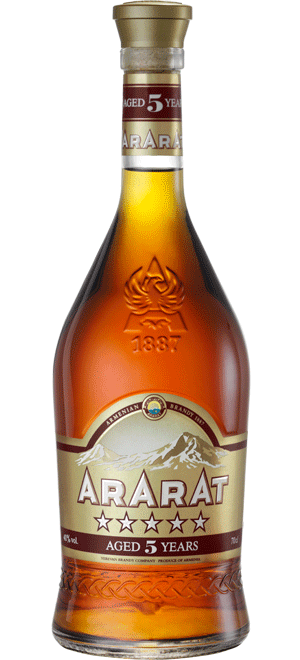
Ararat 5 Years Old Armenian Brandy 
Ararat 5 Years Old Armenian Brandy

Armenia is increasing their production of brandies according to the Armenian-French news magazine, Armenews, with 80% increased production.
Bid brand of brandies such as Ararat (Pernod Ricard) or Noy are looking like they are expanding sales overseas.
Looks like things are changing!

Source: Armenews
SaveSave

Tuesday, October 21, 2014

2014 IS A GOOD HARVEST IN COGNAC!

In Charentes, the home of cognac, volume is predicted to climb 12 percent to 8.82 million hectoliters from 7.88 million hectoliters, with a warm and dry September halting the development of botrytis and mildew fungal disease.
Harvest of the ugni blanc grapes used for distilling cognac started late September, with “clearly” higher-than-usual grape weight compensating for a reduced fruit count. 80% of the harvest suffered from difficult climates during the summer with hailstorms earlier in the summer mid june to late June. And a rainy summer, with a cooler than usual August. September was surprisingly sunnier which allowed for a last minute recovery of the situation.
99% of the producers have completed their harvest as of today.
[youtube=http://www.youtube.com/watch?v=QwZ5TCcE8bk&w=560&h=315]
Distilling cognac will start in 3 weeks. Regulations allow distillation to be operated from 15th November to 31st March. Right now producers are focused on fermenting their juices into wines in times for the 4 1/2 months distilling season.
9 liters of wine with 9% Alc/Vol will produce 1 liter of eaux-de-vie with 70% Alc/Vol. Eaux-de-vie is the name of the spirit produced from distillation. Only after it is aged 2 years in oak barrels, the eaux-de-vie is then called cognac.

2014 COGNAC HARVEST IS OVER WITH GOOD PROSPECTS

In Charentes, the home of cognac, volume is predicted to climb 12 percent to 8.82 million hectoliters from 7.88 million hectoliters, with a warm and dry September halting the development of botrytis and mildew fungal disease.
Harvest of the ugni blanc grapes used for distilling cognac started late September, with “clearly” higher-than-usual grape weight compensating for a reduced fruit count. 80% of the harvest suffered from difficult climates during the summer with hailstorms earlier in the summer mid june to late June. And a rainy summer, with a cooler than usual August. September was surprisingly sunnier which allowed for a last minute recovery of the situation.
99% of the producers have completed their harvest as of today.
[youtube=http://www.youtube.com/watch?v=QwZ5TCcE8bk&w=560&h=315]
Distilling cognac will start in 3 weeks. Regulations allow distillation to be operated from 15th November to 31st March. Right now producers are focused on fermenting their juices into wines in times for the 4 1/2 months distilling season.
9 liters of wine with 9% Alc/Vol will produce 1 liter of eaux-de-vie with 70% Alc/Vol. Eaux-de-vie is the name of the spirit produced from distillation. Only after it is aged 2 years in oak barrels, the eaux-de-vie is then called cognac.

Thursday, May 23, 2013

2012 COGNAC APPELLATION D'ORIGNE CONTROLEE PRODUCTION YIELDS STATISTICS


. Cognac yield down to 9.57 hectoliters of pure alcohol per hectare in 2012.
9.57 hectoliters/ha = 957 liters = 252 US Gallons of pure alcohol.
Cognac Vineyards - Fins Bois
. A vineyard producing wine for comparison does:
52 hectoliters/ha = 5200 liters = 1374 US Gallons of wine.
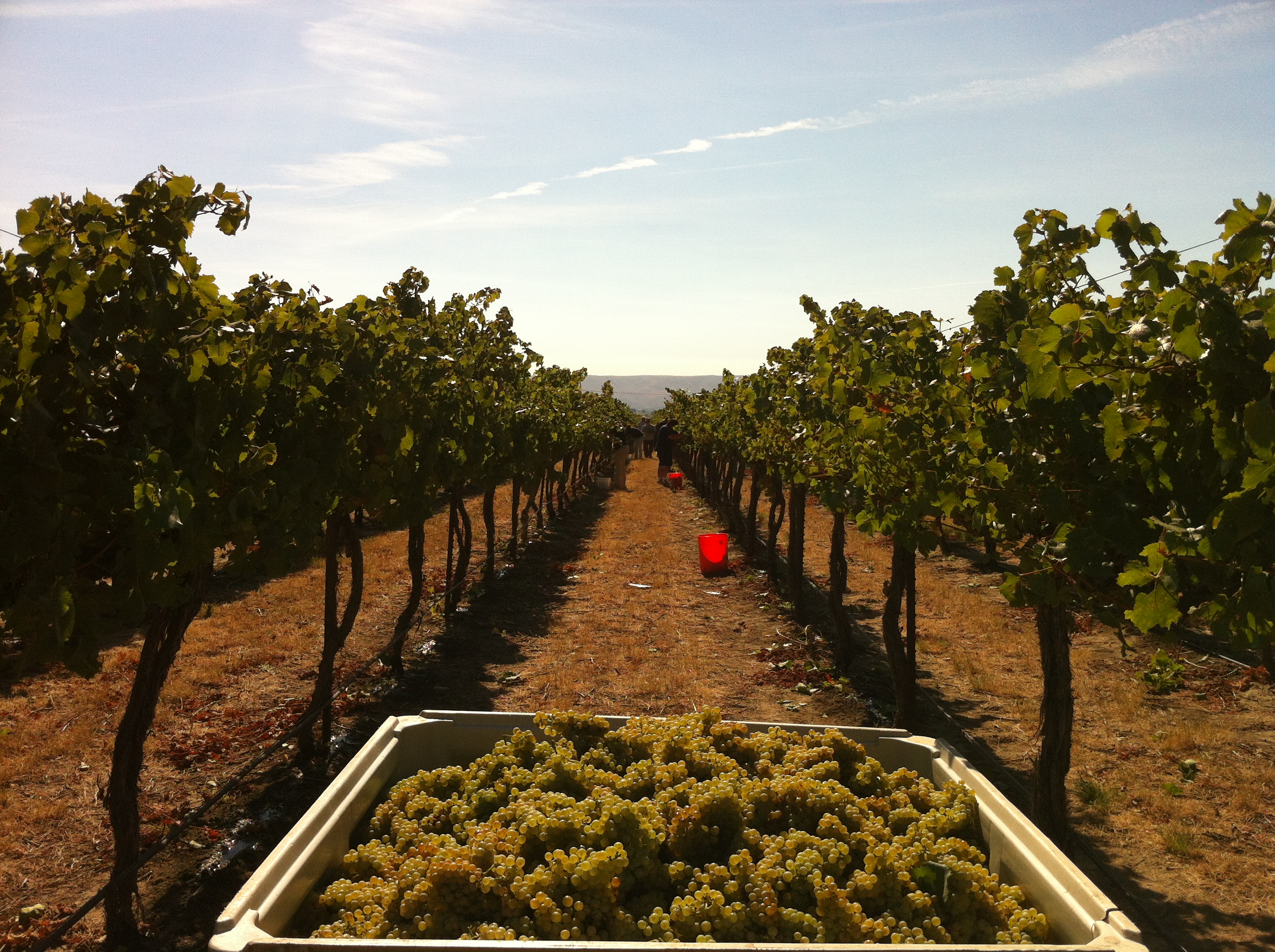
Grape Harvest
Grapes Harvest  Credit: Wikipedia.com
Can you see something wrong with the cognac harvest photo above? Yes! No!
1. It is not Cognac. Correct! This is on the west coast USA.
2. It is not Cognac AOC authorized grapes. Correct! These are chardonnay grapes.
3. There are watering the vines. Correct! Watering vines is a huge big no-no in Cognac AOC.
Early 2012, the Interprofessional Bureau of Cognac (BNIC) fixed the Cognac yields: 10.83 hectoliters of pure alcohol per hectare.
Every year the BNIC sets the maximum yields per hectare. Everything above this yield has to be sold to make other use than cognac. This limitation from the BNIC is part of the many regulations to control the volume of cognac in the market and therefore to reinforce the status of cognac being an authentic luxury spirits.
In 2012, Charentes (1) vineyards faced strong climatic (from drought to heavy rain) and fungal (mildew and powdery mildew) pressures, the 4.699 farms producing cognacs finally displayed a yield of 9.57 hlAP/ha.
In 2012, the dual-purpose grape varieties from the limited area of Cognac produced 7.54 million hectoliters of wine (-15.5% compared to 2011). 98.7% of this wine production is intended to distillation and production of Cognac eaux-de-vie (this percentage was 95.8% last year).
(1) Cognac AOC overlaps 4 departments (sort of counties): Charente, Charente Maritime, Deux-Sevres, and Dordogne. The 2 Charentes are 97% of it versus the 2 other departments are marginally contributing. Charente and Charente Maritime are often referred to as "Charentes".