Showing posts with label China. Show all posts

Friday, June 8, 2018

REMY COINTREAU MAKES PROFITS FROM SALES OF COGNAC IN CHINA

cognacdailynews-remy-cointreau-logo
Remy Cointreau's profits boosted by China's thirst for cognac
Source:
https://www.rte.ie/
7 Jun 2018

Remy Cointreau has reported higher-than-expected annual profits, helped by strong demand for its premium cognacs in China, and predicted more earnings growth this year.
The maker of Remy Martin cognac and Cointreau liqueur said its strategy of selling higher-priced spirits to boost profit margins was delivering strong results.

Remy has been focusing on selling spirits priced at $50 a bottle or more, as part of a strategy that has benefited from a rebound in Chinese demand.
Remy's strategy has differed from that of rival Pernod Ricard, which has launched less expensive brands in China.

The private consumption of drinks and spirits has been recovering in China, offsetting the impact from the country's anti-corruption crackdown over the past few years which had hit sales of premium brand drinks.

Remy Martin cognac, which makes 86% of group profits, achieved a margin of 26.9% of sales, representing an organic increase of 1.3 percentage points.

Remy Cointreau's stock market valuation is closer to that of many luxury good stocks, rather than food and drinks stocks.

Tuesday, June 5, 2018

MILLENIAL REVIVAL FOR COGNAC WILL SHORT COGNAC STOCKS

Cognac Sales Image Logo Icon
Cognac Sales

Cognac shortage deepens as crops destroyed
Source:
http://www.drinksbulletin.com.au/
Alana House
June 04, 2018

A little more than six months after Hennessy announced "constrained" supplies of Cognac, the industry has been plunged into crisis following devastating hailstorms in France.
More than 10,000 hectares of vineyards were damaged in late May, as pebble-sized hail stones pelted the region. Around 14% of the brandy-producing vines of Cognac were affected, with many vineyard owners saying that they had lost all hope of harvesting any grapes.
The storm hit areas not affected by this type of weather damage for more than 40 years, with just under 1000 farms suffering the ravages of the hail.

The Bureau National Interprofessionnel du Cognac (BNIC) the Cognac interprofessional organisation that acts on behalf of all Cognac growers and firms of the region said in a statement on May 26: "Our vineyards were again hit by a violent episode of hail.
"In this difficult moment, the BNIC, its elected officials and its teams express their greatest support to the winegrowers of Charente-Maritime and Charente whose vines were destroyed or damaged.
"Our services are currently in the field to evaluate the precise impact of this episode on our vineyards."
The president of the General Union of Cognac Winemakers, Christophe Véral added that it had been a "catastrophe" and a crisis meeting was likely to take place.
Two years ago, the Cognac region was also hit by hail storms. The extent of the economic impact of poor weather in Cognac for three straight years is not yet known, but is expected to be crippling.

It comes as Cognac is having a millenial-fuelled revival.
BNIC reports that cognac's three largest markets are the United States (78.7 million bottles), Singapore (23.6 million bottles) and China (22.6 million bottles).
As a large proportion of Singapore's imports are shipped on to China, it's likely that China is now the world's largest market for cognac by revenue.
According to Reuters, Hennessy owns around half of the global Cognac market.
However, the category's booming growth was already under strain due to the lack of supply Hennessy has in reserve.

In January, the wine & spirits arm of LVMH, Moet Hennessy, announced a solid jump in 2017 sales, with strong volumes growth for Hennessy Cognac (+8%), which came despite supply constraints that Moet Hennessy said slowed growth in the second half of the year.
It said supply issues, which the company highlighted throughout last year, were likely to continue in 2018, with supplies remaining "relatively constrained".

Hennessy has been planting more vines, but new vineyards will take up to six years to start producing usable grapes - even Hennessy's youngest Cognac is aged between two and eight years.
It's expected the shortage will really begin to bite in late 2019 to early 2020. Experts are suggesting that Cognac lovers stock up on more expensive bottles of Hennessy, such as the V.S.O.P., the X.O. and Hennessy Black.
Wednesday, December 6, 2017

FAKE WINES LABELED HENNESSY FOUND IN CHINA

LVMH's Moet-Hennessy Unit, and logo 
LVMH's Moet-Hennessy Unit, and logo

Source: the drinks business
by Natalie Wang
5th December, 2017

Following a formal complaint filed by French luxury group Louis Vuitton Moët Hennessy, the Beijing Administration for Industry and Commerce has busted a local Chinese wine company which has been selling counterfeit Rhône wines it claimed were made by Moët Hennessy.

The wines in question, purported to be Côtes du Rhône, are distributed by a company called Shanghai Haotuo International Trading Company Ltd based in Beijing's Fengtai District, and each wine carries a back label stating that it's made by Moët Hennessy, using its trademarked Chinese name, reported Beijing TV.

In fact, Moët Hennessy doesn't make wines in the Côtes du Rhône or indeed any part of the Rhône Valley.

Speaking of one of the wines called; 'Wan De Da Special Reserve', an officer called Zhang Peng with the bureau, explained that: "This is to mislead consumers to let them believe the wine is produced by Moët Hennessy."

However, the wine in question has a front label that says it's a Côtes du Rhône Villages Sablet 2003 with a suspiciously sounding French company name called 'France Henris Co Ltd'. Henris in Chinese sounds phonetically similar to Moët Hennessy's Chinese name.

Another imperial bottle claimed to be made by Moët Hennessy with a Chinese name 'Wei Da Mu Special Reserve' is described as "the most treasured bottle" in the shop. It sells for a staggering RMB 99,999 (US$15,121) a bottle. The wine's label says it's a 2007 Côtes du Rhône Sablet, but its back label says it's made by Moët Hennessy.

According to the report, police found more than 500 bottles of counterfeit wines with labels saying they are produced by Moët Hennessy. The wines' retail prices at the shop range from RMB 300 to RMB 99,999.

In a Chinese statement by Moët Hennessy, the company reiterated that it "under no circumstances" had granted Shanghai Haotuo International Trading Company Ltd any right to use its company name, and the products are not produced by Moët.

It's unclear based on the report if any suspect has been arrested.

This is the latest case taken by Moët to crack down on counterfeit wines using its branded names. Previously the company won a court case against wine auction house Acker Merrall & Condit concerning a counterfeit bottle of Krug Collection 1947.

Thursday, January 5, 2017

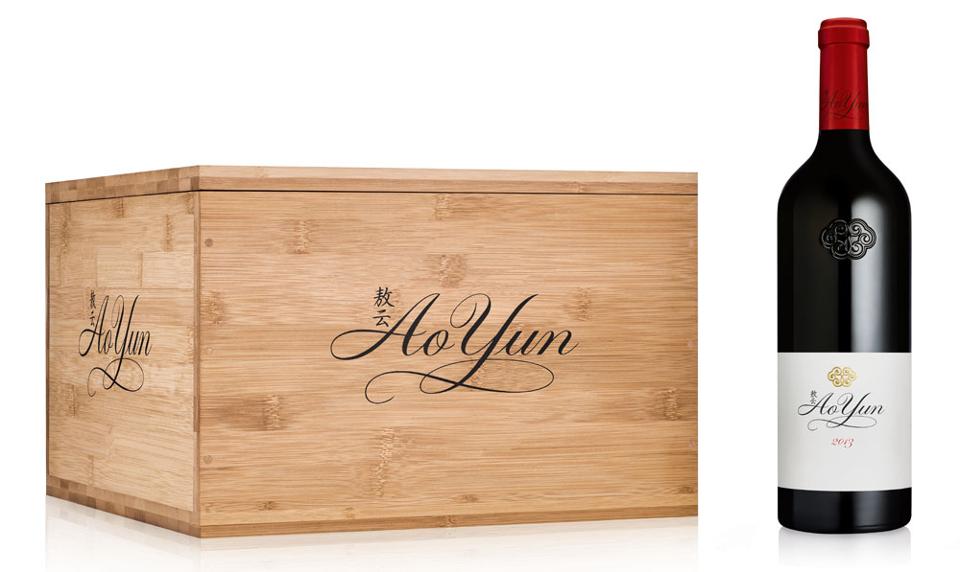
MOET-HENNESSY TO SELL $300 BOTTLE OF WINE MADE IN CHINA

Moet Hennessey is bringing the first high-end wine made in China to US shelves with a price tag of $300 per bottle. Its Ao Yun red wine, meaning "above the clouds," is made in a remote part of the Himalayan plateau, a high-altitude region with steady weather.
cognacdailynews-ao-yun-chinese-wine
Most Expensive wine made in China

The winery is in Yunnan Province, the most southerly in China, hard against the borders of Laos, Vietnam, and Myanmar.

Made of Cabernet-Sauvignon grapes, possibly Cabernet-Franc, vines were planted by Chinese government and nobody is 100% sure.

A new stunning project from M-H worths following...

Source: Forbes

Monday, June 2, 2014

THE WORLD'S LARGEST WINE AND BRANDY PRODUCTION PLANT WILL BE IN CHINA OWNED BY CHANGYU

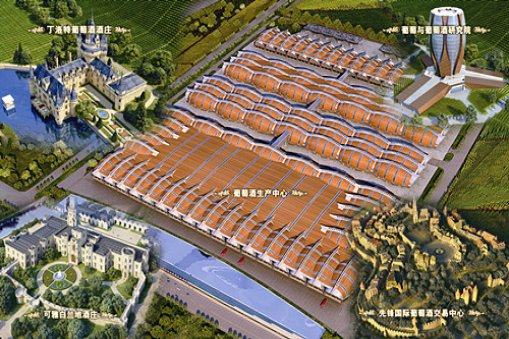
China’s oldest and largest winery, Changyu Pioneer Wine Co., is to build an international “wine city” in Yantai, Shandong province, at a cost of £600m.
The project, covering an area of 413 hectares, will be home to a national wine research institute and wine production centre.
Changyu Wine City
Changyu Wine City
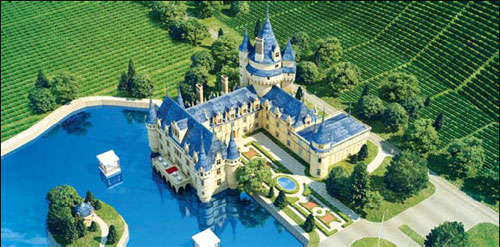
It will also include grape planting areas, an international wine trading center, a European-style village, and two high-end châteaux.
The wine production centre will cover an area of 220,000 square metres, making it one of the world’s largest wine and brandy production plants.
Changyu Wine City
Changyu Wine City
The city – an amalgam of research, winemaking and tourism – is expected to be completed by 2016.
Changyu Pioneer Wine Co. was established in 1892, when cuttings from Bordeaux, Burgundy and Alsace were planted in Yantai.
In 2002, the company built its first French-style château – Château Changyu-Castel – in Yantai in cooperation with the Castel Group, planted primarily with Cabernet Gernischt – a red variety similar to Cabernet Franc.
It has since added a further five châteaux to its portfolio, three of which are operational.
Changyu Wine City
Changyu Wine City
The other three: Château Changyu Baron Balboa in Xinjiang Uygur, Château Changyu Moser XV in Ningxia Hui and Château Changyu Reina in Shaanxi province, are expected to open in the next six months.
In 2006, Changyu collaborated with Canadian company Aurora to build the largest ice wine château in the world near Huanlong Lake in Liaoning province. It has also expanded overseas, with Château Changyu Kely in New Zealand.
Changyu Pioneer Wine Co. is the tenth largest wine company in the world.

Wednesday, January 16, 2013

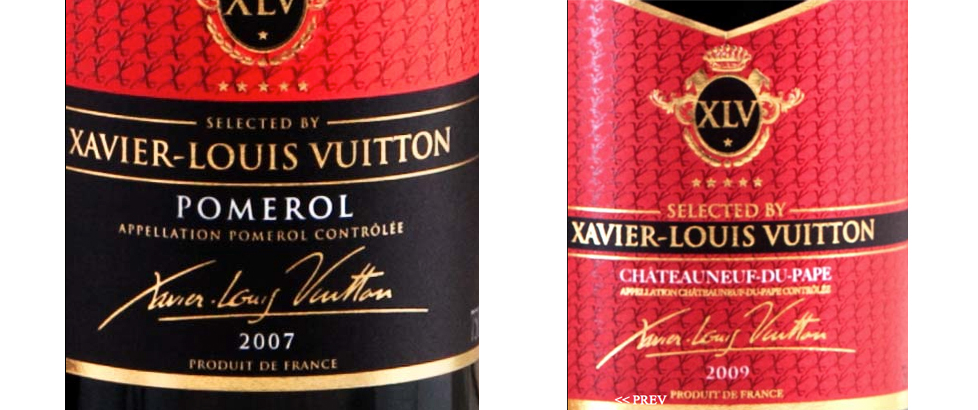
XAVIER LOUIS VUITTON LAUNCHES WINES IN CHINA


A fifth-generation family member of the Louis Vuitton dynasty has launched a wine in Hong Kong developed specifically to cater to the Asian palate.
Wines Xavier Louis Vuitton
Winemaker Xavier-Louis Vuitton’s XLV, an exclusive private label, was developed with the Asian drinker in mind, a palate that favors fruit-driven notes and softer tannins in red wines, reports industry publication The Drinks 

While XLV has no connection with the Louis Vuitton brand or LVMH, the family connection and name recognition is sure to sway consumers in brand-obsessed Hong Kong, notes the story.
Vuitton owns a wine estate near the village of Apt in southern France, which he manages with his son Quentin-Louis who acts as cellar master.
Only the Ventoux wine is made from Vuitton’s estate grapes, while others are made with grapes from the Bordeaux, Rhone, and Champagne regions.
The XLV brand is available through Hong Kong-based online retailer yeswine.com, with prices ranging from HK $360 (€36) for the XLV Ventoux 2010, to HK $2,450 for the XLV Pauillac 2007 or €242.
While Xavier-Louis may be developing a wine made with French grapes for Chinese drinkers, another brand within the LVMH family Moet Hennessy has set its sights on China as a wine-producing nation in its own right, snapping up estates in Shangri-La county in Yunnan Province.
Similarly, Chateau Lafite Rothschild has also begun work on a vineyard in the Penglai region of China’s eastern Shandong province to cater to the country’s growing thirst for premium luxury wines.
China is the fifth largest wine market by volume in the world, having recently knocked Britain into sixth place.
I am a little perplex by this situation. On one hand you cannot stop someone to call their wines their name, but on the other hand you can be sure that a great deal of these wines will be purchased on the basis of the name recognition, and more important on the brand association and confusion with a legitimate product from the LVMH group. This could get messy!
Source: Luxuo.com
Source Photo: www.xlvwine.com